British “thermal eye” satellite set for launch, promising unprecedented peek inside Iran’s nuclear facilities
04/06/2026 / By Jacob Thomas
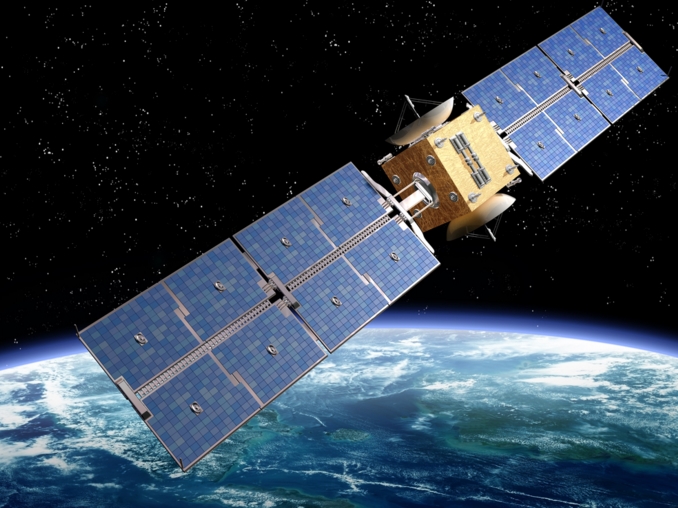
- A British satellite named HotSat-2, developed by SatVu, can detect human activity through walls at sensitive sites like Iran’s nuclear facilities using high-resolution thermal cameras.
- The technology captures infrared heat signatures day or night, allowing intelligence agencies to monitor restricted areas from space, including reactor operations.
- Backed by $40 million from NATO and launched via SpaceX, it aims for a constellation enabling imagery of any Earth location every two hours.
- SatVu has monitored sites like North Korea’s Yongbyon center and can assess damage from incidents like explosions at energy facilities in the Middle East.
- While valuable for military intelligence and allied sharing, the satellites also track urban heat and environmental changes for climate resilience.
A revolutionary British satellite capable of detecting human activity through the walls of sensitive sites like Iran’s nuclear facilities is set for launch.
The spacecraft, developed by London-based company SatVu, represents a significant leap in thermal imaging intelligence, potentially altering the landscape of global security and arms monitoring.
The satellite, named HotSat-2, is equipped with cutting-edge high-resolution thermal cameras so precise that they can discern when individual pumps on a nuclear reactor are switched on. According to SatVu, the technology can capture detailed imagery and video through thick walls and smoke, day or night, providing intelligence agencies with the ability to “see inside” strategically important buildings.
As noted by BrightU.AI‘s Enoch, thermal camera satellites, which primarily operate in the infrared spectrum, measure the temperature of the Earth’s surface and atmosphere by detecting the thermal energy (heat) they emit. Unlike optical telescopes, these sensors do not rely on visible light but instead capture the infrared radiation emitted by objects, allowing for temperature mapping day and night.
The data collected is used to build models of atmospheric and surface temperatures, though it requires careful calibration and processing of raw radiance measurements, as the view is a downward-looking perspective that can be misinterpreted without understanding the technology’s principles.
The satellites are designed for economic monitoring and climate resilience
Anthony Baker, SatVu’s chief executive, emphasized the system’s strategic value. “High-resolution thermal data is no longer a nice-to-have; it is a fundamental requirement to complete geographical intelligence assessments,” he stated. “Unlike thermal data captured from airplanes or drones, SatVu can capture data from any point on the Earth’s surface, including inaccessible or restricted areas,” added Baker.
Scheduled to be fired into orbit atop a SpaceX Falcon 9 rocket from California, the satellite is backed by $40 million in NATO funding. The company plans a constellation of eight satellites, which would allow it to recapture imagery of any location on Earth every two hours.
The launch comes amid escalating tensions in the Middle East, where Iranian-linked strikes have recently targeted oil facilities in Kuwait and Saudi Arabia, as well as the world’s largest liquefied natural gas facility in Qatar. Baker highlighted the technology’s utility in such crises, noting, “If you see a big explosion at Ras Laffan in Qatar, you don’t know how much of it has gone up in flames. Our imagery lets you know with much more certainty what part has been hit and has gone offline.”
While the United States is believed to possess similar classified capabilities, a commercial provider like SatVu could enable easier intelligence sharing with allies without the same security restrictions. The company already has contracts with the U.S. government, Japan and several European nations, though not yet with the United Kingdom.
SatVu has previously demonstrated its capability by monitoring the Yongbyon Scientific Research Centre in North Korea. Over three months, its imagery revealed thermal signatures from reactors and warmer water discharge, suggesting the site “may be undergoing pre-operational testing,” which could bolster Pyongyang’s nuclear program.
Beyond military and intelligence applications, the satellites are designed for economic monitoring and climate resilience, tracking urban heat islands and environmental changes. U.K. Space Minister Liz Lloyd praised the project, calling SatVu “a shining example of British innovation at its best.”
As the satellite heads to the launch pad, its advanced thermal eyes promise to peel back layers of secrecy at critical sites worldwide, offering allies a powerful new tool for informed decision-making in an increasingly volatile world.
Watch this video about Iran’s new secret nuclear facility.
This video is from the NewsClips channel on Brighteon.com.
Sources include:
Submit a correction >>
Tagged Under:
arms monitoring, big government, British innovation, future science, future tech, global security, HotSat-2, infrared, inventions, Iran, Middle East, military tech, national security, NATO funding, nuclear facilities, reconnaissance, satellite, SatVu, space, SpaceX, surveillance, thermal imaging, weapons technology
This article may contain statements that reflect the opinion of the author
RECENT NEWS & ARTICLES